
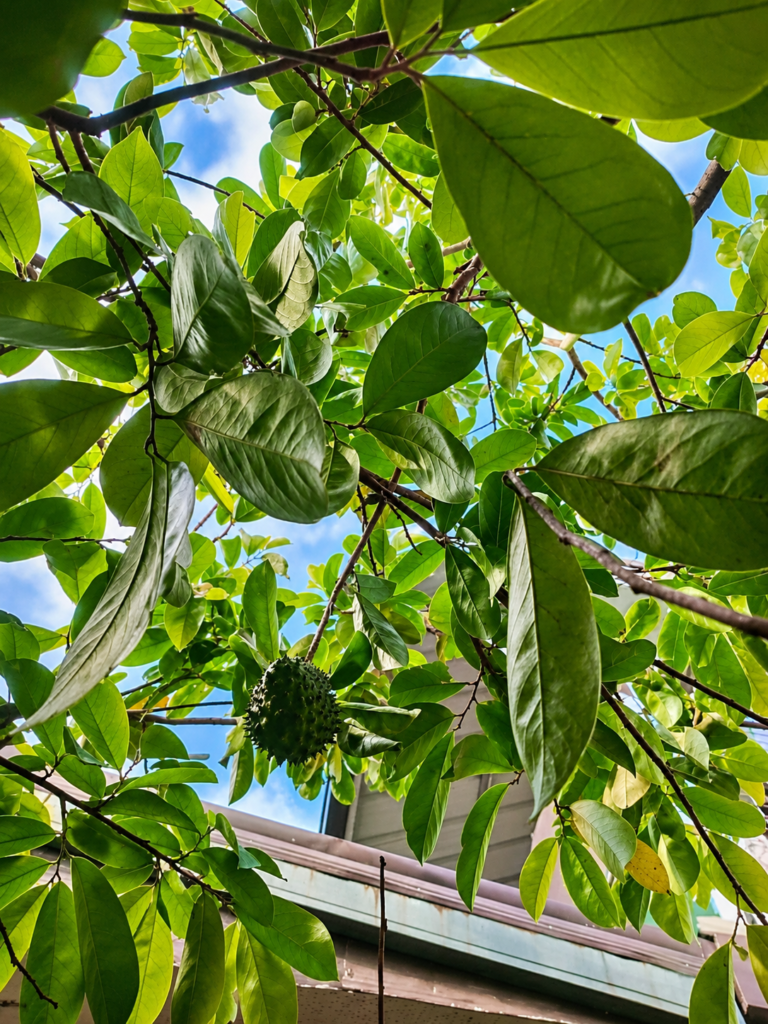
Growing fruit trees from seed has always been part of my gardening journey. Some people prefer buying grafted trees because they usually produce fruit sooner, but I’ve always enjoyed the challenge of starting from a tiny seed and watching it become a productive tree. Every successful harvest feels like an accomplishment that began with patience and faith.
Guyabano, also known as soursop (Annona muricata), has been one of my biggest gardening challenges.
I’ve tried growing it several times in my Florida backyard. Some seedlings grew well for months before winter arrived. Others simply didn’t survive long enough to become established. Every failed attempt taught me something new about this tropical fruit tree and Florida’s unpredictable weather.
Most gardeners would probably have given up.
I didn’t.
The reason is simple.
Guyabano is one of my favorite tropical fruits.
I still remember eating fresh, fully ripened guyabano with family. The soft white flesh, sweet flavor with a slight citrus tang, and wonderful aroma make it one of those fruits you never forget. Every time I plant another seed, I’m reminded of those memories and the hope that one day I’ll harvest fresh guyabano from my own backyard.
Some people ask why I don’t simply buy a grafted tree.
The answer usually comes down to practicality.
Depending on the variety and nursery, grafted guyabano trees can cost anywhere from $75 to more than $150, sometimes even more for larger specimens. A packet of seeds, or seeds saved from a ripe fruit, costs very little. For me, growing from seed has always been part of the adventure.
Many people also believe that seed-grown fruit trees always take many years before producing fruit.
My own experience tells me it isn’t always that simple.
My sugar apple tree surprised me by producing fruit much sooner than many people would expect from a seed-grown tree. Every fruit tree is different. Climate, genetics, soil conditions, watering, fertilizing, and even a little luck all play a role in how quickly a tree matures.
That experience encouraged me to keep trying with guyabano.
The biggest obstacle has never been waiting for fruit.
It’s surviving winter.
Unlike sugar apple, guyabano is a true tropical tree. It loves warmth, sunshine, and humidity. Even a short period of cold weather can damage young trees. Here in Florida, especially outside the southernmost parts of the state, winter often becomes the biggest challenge rather than growing the tree itself.
One particularly cold winter damaged several of my tropical plants. My guyabano seedlings were among the hardest hit. It was frustrating to watch months of growth disappear almost overnight, but it also reminded me that gardening is never completely under our control. Nature always has the final say.
Instead of quitting, I planted another seed.
Today, I have another healthy young guyabano tree growing in my backyard. Watching it develop gives me hope that this attempt may finally become the one I’ve been working toward for years.
If you’re thinking about growing guyabano in Florida, don’t let my failures discourage you. Instead, learn from them.
What Is Guyabano?
Guyabano, also known around the world as soursop or guanábana, is a tropical fruit tree prized for its large green fruit covered with soft spines and its creamy white flesh. Native to the tropical Americas, it is now grown throughout the Caribbean, Central America, South America, Southeast Asia, and other warm regions.
The flavor is difficult to describe until you’ve tasted it yourself. Many people compare it to a blend of pineapple, strawberry, banana, and citrus, creating a refreshing combination that’s delicious fresh or in juices, smoothies, desserts, and ice cream.
For many Filipino families, guyabano is more than just another fruit. It’s part of childhood memories, backyard gardens, and family gatherings.
Can You Grow Guyabano in Florida?
Yes—but success depends largely on where you live and how you protect the tree.
South Florida offers the best conditions because freezing temperatures are uncommon. Central Florida gardeners can also grow guyabano, but they should expect to provide protection during cold weather, especially while the tree is young.
If you live in North Florida, growing guyabano outdoors becomes much more difficult because winter temperatures regularly drop below what the tree can tolerate.
That doesn’t mean it’s impossible, but it does require much more planning and protection.
Choosing the Right Location
The location you choose can make the difference between success and failure.
Guyabano grows best where it receives:
- At least 6–8 hours of direct sunlight each day.
- Well-drained soil.
- Protection from strong winds.
- Plenty of room to develop.
Avoid planting in low areas where cold air settles during winter nights.
If possible, plant near the south side of your home or another structure that provides some protection from cold winds. Even a small amount of additional warmth can help young trees survive unexpected cold fronts.
Soil Requirements
Guyabano prefers fertile, well-drained soil rich in organic matter.
Before planting, improve poor soil by mixing in compost or well-aged organic material. Good drainage is especially important because constantly wet soil can lead to root problems.
Applying mulch around the tree helps conserve moisture, reduce weeds, and keep the soil cooler during Florida’s hot summers.
Just remember to keep mulch several inches away from the trunk.
Watering
Young trees should be watered regularly while establishing their root system.
The goal is consistent moisture—not constantly wet soil.
During extended dry periods, deep watering is usually better than frequent shallow watering because it encourages deeper root growth.
As the tree matures, it becomes more tolerant of short dry spells, although regular watering still produces healthier growth and better fruit production.
Fertilizing
A healthy guyabano tree benefits from regular feeding throughout the growing season.
Choose a balanced fertilizer designed for fruit trees and follow the manufacturer’s recommended application rates.
Avoid applying excessive fertilizer because too much nitrogen often produces beautiful leaves but fewer flowers and fruit.
Healthy trees begin with healthy soil.
Whenever possible, improve your soil naturally by adding compost and organic matter each year.
Protecting Your Tree During Winter
This is the lesson I learned the hard way.
If you live in Central Florida, don’t ignore weather forecasts during winter.
Simple protection methods can make a huge difference.
These include:
- Covering young trees with frost cloth.
- Applying mulch around the root zone.
- Watering before an expected freeze if appropriate for your conditions.
- Growing young trees in large containers that can be moved into a protected area during cold weather.
Sometimes one cold night is all it takes to change the outcome of an entire growing season.
Growing From Seed
Growing guyabano from seed takes patience, but it’s also one of the most rewarding ways to start a fruit tree.
Fresh seeds usually germinate better than older stored seeds.
Plant the seeds in a well-draining seed-starting mix, keep them warm, and maintain consistent moisture.
Don’t become discouraged if germination takes several weeks.
Some seeds simply take longer than others.
Common Problems
Like many tropical fruit trees, guyabano can occasionally experience:
- Cold damage
- Root rot from poor drainage
- Nutrient deficiencies
- Leaf drop after environmental stress
- Occasional insect pests
Regular observation is often the best defense.
Catching problems early usually makes them much easier to correct.
Is Growing Guyabano Worth It?
For me, absolutely.
Not because it’s easy.
Because it’s rewarding.
Every gardener has one plant that refuses to cooperate.
Guyabano has been mine.
But every new leaf, every healthy branch, and every season that my tree survives reminds me why I continue trying.
One day, I hope to harvest my own backyard-grown guyabano.
When that day comes, every failed attempt will have been worth it.
Until then, I’ll keep planting, learning, and sharing the journey.
Because sometimes the best gardening stories aren’t about the plants that grew perfectly.
They’re about the ones that taught us the most.
You May Also Like
If you’re interested in growing tropical fruit trees, you may also enjoy these guides on Plantegarden:
- How to Grow Sugar Apple (Sweetsop) at Home
- How to Grow Kangkong (Water Spinach)
- Growing Sweet Potatoes in Your Backyard
Each guide is based on practical gardening experience and is designed to help beginners grow healthy, productive plants at home.
Recommended Gardening Products
Growing guyabano is easier with the right tools and supplies. Here are a few products that many home gardeners find useful.
- Frost Blanket or Frost Cloth – Helps protect young trees during unexpected cold nights.
- Balanced Fruit Tree Fertilizer – Supports healthy growth, flowering, and fruit production.
- Organic Compost – Improves soil structure and drainage.
- Premium Potting Mix – Ideal for growing guyabano in large containers.
- Large Nursery Pot (20–25 Gallon) – A good choice if you plan to move your tree indoors during cold weather.
- Wood Chip or Pine Bark Mulch – Helps retain moisture and regulate soil temperature.
- Garden Pruning Shears – Useful for removing damaged or dead branches.
- Watering Wand or Soaker Hose – Makes deep watering easier while reducing water waste.
Some of the links on this page may be affiliate links. If you make a purchase through them, Plantegarden may earn a small commission at no additional cost to you. Thank you for supporting our work.