
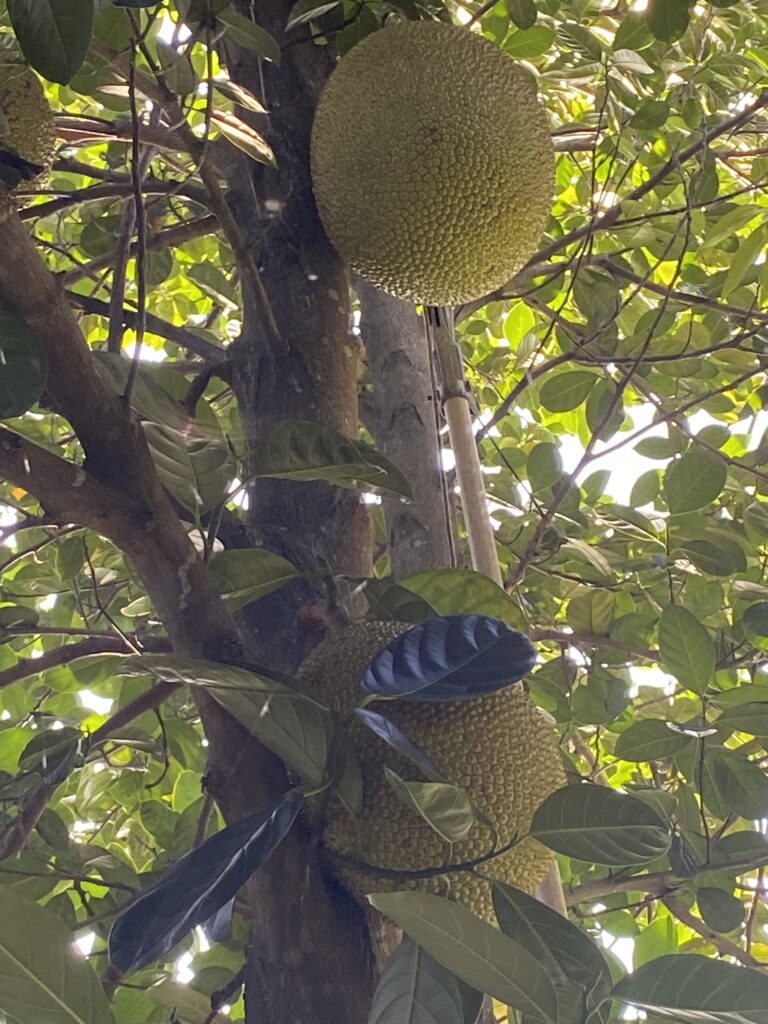
Jackfruit Benefits and Nutrition
Jackfruit provides several nutrients, including vitamin C, potassium, magnesium and fiber. A one-cup serving of sliced jackfruit provides about 157 calories, 38.3 grams of carbohydrate, 2.5 grams of fiber and 2.8 grams of protein, according to nutrition information cited by Healthline.
Jackfruit also contains plant compounds such as carotenoids and flavonoids. Research into possible health effects is ongoing, but many claims found online come from laboratory, animal or extract-based studies rather than strong clinical evidence in people. For that reason, it is better to view jackfruit as a nutritious food rather than a treatment for a medical condition.
The fruit can be eaten ripe and sweet or harvested immature for savory recipes. The seeds are also edible after cooking.
How to Grow Jackfruit
Jackfruit is best suited to tropical and warm subtropical climates. UF/IFAS notes that it grows well in the humid subtropical conditions of South Florida, particularly in areas where freezes are uncommon.
Choose the Right Location
Plant jackfruit in full sun where the tree has plenty of room to develop.
This is not an ideal choice for a small planting bed next to a house.
UF/IFAS recommends leaving about 25–30 feet between an unpruned jackfruit tree and other trees or structures. With regular annual or semi-annual pruning, the recommended spacing can be reduced to about 20–25 feet.
That spacing is one of the most important things to consider before planting.
Soil and Drainage
Jackfruit needs soil that drains well. Continuously wet or flooded soil can cause serious problems; UF/IFAS reports that trees may decline or die after only two to three days under continuously wet conditions.
If your planting location stays soggy after heavy rain, fix the drainage problem or choose another location rather than assuming more watering will help.
Watering
Jackfruit trees are moderately drought tolerant once established, but they benefit from watering during prolonged dry periods. Regular moisture is particularly important during flowering and fruit development.
The goal is adequate moisture without keeping the root zone saturated.
Growing From Seed or Buying a Tree
Jackfruit can be propagated from seed, grafting and other methods.
Growing from fresh seed can be interesting for gardeners, but there is an important trade-off: a seed-grown tree may not reproduce the exact characteristics of the parent fruit.
UF/IFAS says that, when possible, grafted trees of known cultivars are preferred. Seed-grown trees can begin producing in the third or fourth year under suitable conditions, although timing varies with the tree and growing conditions.
If your priority is getting predictable fruit characteristics rather than simply experimenting with a seed, a grafted tree of a known cultivar is the more practical choice.
Protect Young Trees From Cold
Cold is one of the major limitations for jackfruit.
UF/IFAS reports that leaves can be damaged around 32°F, branches around 30°F, and branches and trees may be killed around 28°F.
That makes jackfruit much better suited to genuinely warm climates than areas that regularly experience freezing temperatures.
Fertilizing
Jackfruit benefits from regular nutritional management during active growth. UF/IFAS recommends several fertilizer applications during the growing season and specifically cautions against applying nitrogen-containing fertilizer after August in its Florida production guidance because continued vegetative growth going into winter can reduce spring flowering.
For home gardeners, fertilizer selection and timing should also account for local soil conditions and the product label rather than relying on a single universal fertilizer schedule.
Pruning
Pruning is important if you want to keep a jackfruit tree manageable in a home landscape.
UF/IFAS recommends selective pruning after harvest to control tree height and spread.
This is especially important because allowing the tree to grow without regular pruning can require considerably more space.
When Is Jackfruit Ready to Harvest?
Knowing when to harvest is more useful than simply being told to wait until the fruit “changes color.”
UF/IFAS identifies several signs of maturity, including changes in fruit color, flattening or widening of the surface spines, development of aroma and a change in the sound produced when the fruit is tapped. Different cultivars can also behave differently at maturity.
Florida’s Department of Agriculture and Consumer Services notes that jackfruit is harvested in Florida primarily from May through November, although the timing can vary. The fruit can continue ripening at room temperature after harvest.
Be Prepared for the Sticky Latex
One thing first-time jackfruit growers may not expect is the sticky white latex released when the fruit is cut.
UF/IFAS recommends coating your hands with vegetable oil before handling fresh jackfruit because the latex can make preparation difficult.
Gloves and an easy-to-clean work surface can also make the job much less frustrating.
Is Jackfruit a Good Tree for a Home Garden?
Jackfruit can be an excellent choice if your climate and property can accommodate it.
Good fit if you have:
- A warm tropical or subtropical climate
- Full sun
- Well-drained soil
- Plenty of planting space
- Protection from severe cold
- Willingness to prune the tree
Think twice if you have:
- Poor drainage or a flood-prone yard
- Regular freezing temperatures
- Very limited planting space
- No practical way to manage a large fruit tree
The size issue deserves particular attention. UF/IFAS lists jackfruit as a medium-to-large tree and recommends substantial spacing in the home landscape.
Growing Jackfruit From Seed: One Important Tip
If you’re starting from a fresh jackfruit seed, don’t treat it like an ordinary long-storage garden seed.
UF/IFAS notes that jackfruit seeds are relatively short-lived and may only be stored for about 30 days.
That makes fresh seed a more sensible starting point than buying old, dried seed from an unknown source.
If you’re interested in growing from seed, you can also check current seed availability through our gardening resources before purchasing.
Final Thoughts
Jackfruit offers more than an unusual tropical fruit. It can provide edible fruit, cooked seeds and a versatile ingredient for both sweet and savory dishes. But the tree itself deserves serious planning.
The most important considerations are warmth, drainage, sunlight, space and pruning. If those conditions are right, jackfruit can be a worthwhile addition to a suitable home landscape. If the planting area is small, cold or poorly drained, choosing another fruit tree may be the smarter option.