
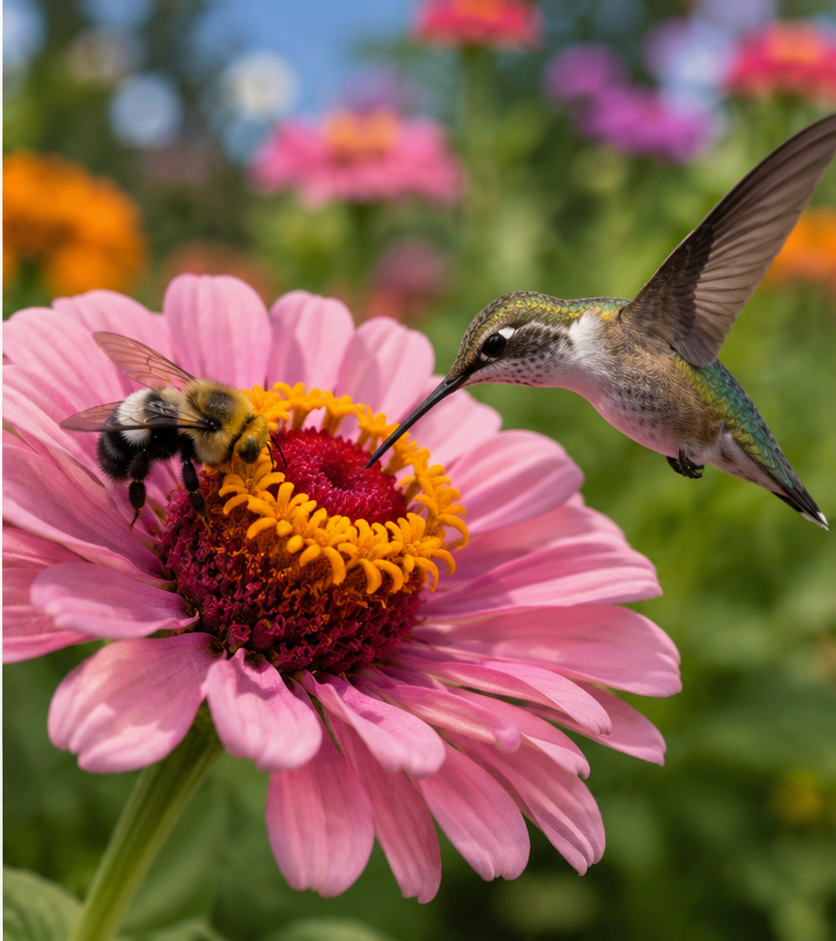
One of the most rewarding parts of gardening is watching butterflies, bees, and other pollinators visit the flowers you grow. Over the years, I have noticed that a garden becomes much more active when it contains plants that provide nectar and pollen. Even a small garden can attract pollinators when the right flowers are planted.
Pollinators help many plants produce fruits, vegetables, and seeds. By choosing pollinator-friendly plants, gardeners can support local wildlife while creating a colorful and lively outdoor space.
Why Pollinators Matter
Pollinators play an important role in healthy gardens.
Common pollinators include:
- Butterflies
- Honeybees
- Native bees
- Hummingbirds
- Moths
- Beetles
As they move from flower to flower, they help transfer pollen, allowing many plants to produce fruits and seeds.
A garden filled with pollinators is often healthier and more productive.
Zinnias
Zinnias are among my favorite pollinator plants because they are easy to grow and provide bright blooms throughout much of the growing season.
Benefits of zinnias:
- Attract butterflies
- Produce colorful flowers
- Grow well in Florida heat
- Suitable for containers and garden beds
Their long blooming period makes them an excellent choice for pollinator gardens.
Salvia
Salvia produces colorful flower spikes that attract bees, butterflies, and hummingbirds.
These plants tolerate Florida’s warm climate and often bloom for extended periods with minimal care.
Coneflowers
Coneflowers are known for their daisy-like blooms and ability to attract a wide variety of pollinators.
Advantages include:
- Drought tolerance
- Long flowering season
- Butterfly attraction
- Easy maintenance
They work well in both large and small gardens.
Milkweed
Milkweed is one of the most important plants for monarch butterflies.
The plant serves as a host plant where monarch butterflies lay their eggs, while also providing nectar for adult butterflies.
Many Florida gardeners include milkweed as part of a butterfly-friendly landscape.
Pentas
Pentas perform exceptionally well in Florida gardens.
These colorful flowers attract:
- Butterflies
- Bees
- Hummingbirds
Their ability to bloom through hot weather makes them a valuable addition to pollinator gardens.
Black-Eyed Susans
Black-eyed Susans provide bright yellow blooms that attract beneficial insects and pollinators.
They are easy to grow and can add cheerful color to garden beds throughout the season.
Herbs That Attract Pollinators
Many flowering herbs attract pollinators while providing useful harvests for gardeners.
Popular choices include:
- Basil
- Mint
- Oregano
- Rosemary
- Thyme
Allowing some herbs to flower can significantly increase pollinator activity.
Creating a Pollinator-Friendly Garden
Simple steps can make a garden more attractive to pollinators.
Plant a Variety of Flowers
Different flowers bloom at different times. A mix of plants helps provide nectar throughout the growing season.
Avoid Excessive Pesticides
Many pesticides can harm beneficial insects. Use them carefully and only when necessary.
Provide Water
A shallow water source can help butterflies and bees during hot weather.
Include Native Plants
Native plants often provide valuable food and shelter for local pollinator species.
Pollinator Gardening in Small Spaces
You do not need a large yard to attract pollinators.
Pollinator-friendly plants grow successfully in:
- Containers
- Raised beds
- Small patios
- Urban gardens
- Balcony gardens
Even a few flowering plants can attract butterflies and bees.
Common Mistakes to Avoid
When creating a pollinator garden, try to avoid:
- Planting only one flower variety
- Using too many pesticides
- Removing flowers too quickly
- Forgetting water sources
- Growing only non-flowering plants
Diversity is often the key to attracting more pollinators.
Final Thoughts
The best plants for pollinators combine beauty with practical benefits for the garden. Flowers such as zinnias, salvia, coneflowers, milkweed, pentas, and black-eyed Susans help attract butterflies, bees, and hummingbirds while adding color to outdoor spaces.
My experience has shown that even a small Florida garden can become a busy pollinator habitat with the right plants. By choosing flowers that provide nectar and pollen throughout the year, gardeners can support beneficial insects while enjoying a more vibrant and productive garden.