
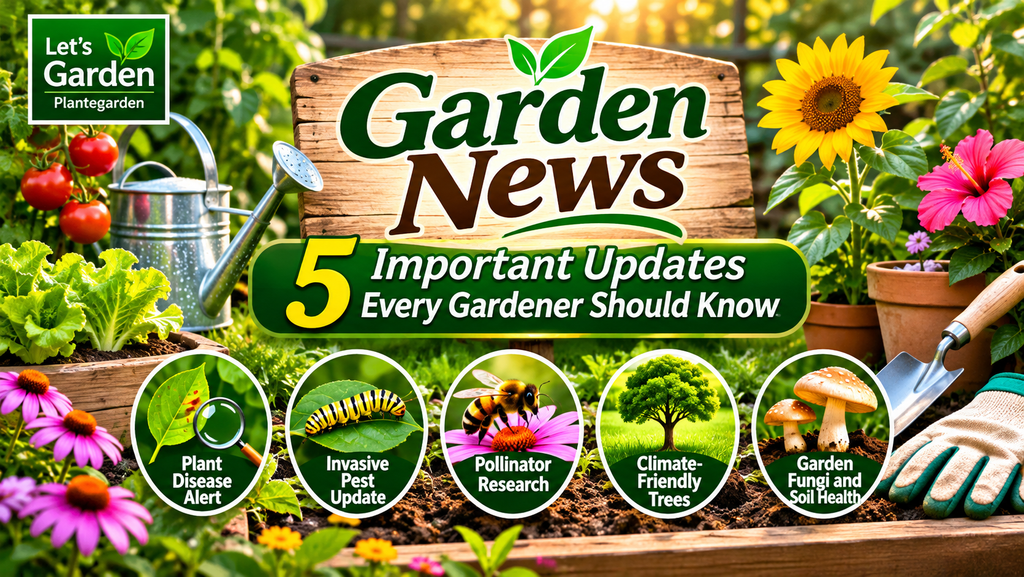
October 1–31, 2026 | Plantegarden Garden News
October brought important developments in plant health, invasive pests, pollinator behavior, climate-friendly trees, and soil care. Here are five gardening updates worth knowing and what they mean for your garden.
1. Plant Disease Alert: Xylella Fastidiosa Detected in Luxembourg
Reported: October 15, 2026 | Source: International Plant Protection Convention (IPPC)
The plant-damaging bacterium Xylella fastidiosa was confirmed at three locations in Luxembourg’s Moselle wine-growing region, raising concerns about its spread into previously unaffected areas.
The bacterium can infect several types of plants, including grapevines, olives, and certain ornamental plants. It spreads through insects that feed on plant fluids.
What gardeners should know: Buy plants from reputable nurseries, watch for unusual leaf scorching or dieback, and report suspected infections to local plant-health authorities. These symptoms can have several causes, so visual inspection alone cannot confirm Xylella.
Source: International Plant Protection Convention
2. Invasive Box Tree Moth Prompts Expanded Quarantine
Reported: October 1, 2026 | Source: USDA APHIS
The U.S. Department of Agriculture expanded its box tree moth quarantine in New Jersey to include Atlantic and Cumberland counties.
Box tree moth caterpillars feed on boxwood leaves and can cause severe damage to ornamental shrubs. Heavy infestations may strip plants of their foliage.
What gardeners should know: Inspect boxwood shrubs for caterpillars, webbing, and chewed leaves. Gardeners in regulated areas should check USDA movement restrictions before transporting boxwood plants or cuttings across state lines.
Source: USDA Animal and Plant Health Inspection Service
3. Urban Development Is Changing Pollinator Activity
Reported: October 11, 2026 | Source: University of Florida research, reported by WUSF/WUFT
Research involving 52 pollinator species found that pollinator activity began later in heavily urbanized environments compared with less-developed areas.
In the most modified landscapes studied, activity began approximately three weeks later. Changes in pollinator timing could affect how insects interact with flowering plants.
What gardeners should know: Grow a variety of flowering plants that bloom at different times. Native flowers, reduced pesticide use, and suitable nesting areas can help support bees, butterflies, and other pollinators throughout their active seasons.
Source: WUSF Public Media
4. Research Highlights Garden Trees That Help With Heat and Climate Challenges
Reported: October 12–13, 2026 | Source: Royal Horticultural Society (RHS)
Research examining 19 popular garden trees assessed their ability to provide cooling, manage rainfall, store carbon, and support wildlife.
Flowering cherry trees performed particularly well in cooling tests, including at temperatures around 95°F (35°C).
What gardeners should know: When selecting a tree, consider its mature size, shade coverage, water needs, root growth, and suitability for your local climate. The right tree can cool outdoor spaces, provide wildlife habitat, and help manage rainwater.
Source: Royal Horticultural Society
5. Garden Fungi Play an Important Role in Healthy Soil
Reported: October 7, 2026 | Source: Royal Horticultural Society (RHS)
The Royal Horticultural Society highlighted the importance of fungi in gardens as wetter conditions encouraged mushroom growth following a hot, dry summer.
Many fungi break down dead leaves, wood, and other organic materials, returning nutrients to the soil. Some also form beneficial relationships with plant roots.
Researchers are investigating whether beneficial fungi could help compete with harmful species such as honey fungus.
What gardeners should know: Mushrooms are not automatically signs of unhealthy soil. Leave suitable organic matter to decompose, use organic mulch appropriately, and investigate fungi when they appear alongside declining or dying plants. Never eat unidentified wild mushrooms.
Source: Royal Horticultural Society
Final Thoughts
October’s gardening developments highlight five practical priorities: preventing plant diseases, monitoring invasive pests, supporting pollinators, choosing climate-suitable trees, and maintaining healthy soil.
Small decisions—from selecting nursery plants to protecting beneficial insects—can make a meaningful difference in the health of a garden.
For more gardening articles, seasonal planting guides, and practical growing advice, visit Plantegarden.